An Exploration of Canadian Census Data by exploring Canada’s Diversity Statistics, and The Vanier Institute of the Family’s Diversity Framework and Cultural Community Lived Experiences
Register for our dynamic two-part panel series exploring the recent 2021 Canadian census data and hear from cultural community members about their lived experiences.
You can register for our second panel event even if you didn’t attend the first event. Scroll down for full details of our second event.
Panel Event #1: Monday March 6, 2023
6:30 – 8:30 P.M. (C.S.T.) on Zoom
This first in a series of panel discussions on Canadian diversity will serve to set the context for an ongoing dialogue for cultural community members on how the ever-changing make-up of Canada impacts their lives and the lives of their families and communities.
Participants for Panel #1
Moderator: Louise Simbandumwe
Presenter: Kathryn Spence, Chief of the Census Program in Diversity and Sociocultural Statistics, Statistics Canada.
Panel Members:
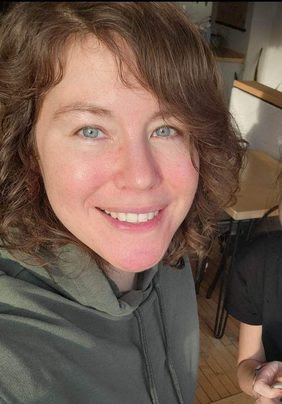
Kathleen Vyrauen
Erika Frey
Reflector: Sanjam Panag
This first event will include the Chief of the Census Program in Diversity and Sociocultural Statistics at Statistics Canada, who will focus on presenting an overview of the relevant census data (2021) that highlights the increasing diversity to be found in Canada in so many different domains.
The second panel event will focus on the Vanier Institute of the Family’s Family Diversity Framework which recognizes that in the last two decades, we have seen a rapid change in Canadian families and have been living through increasing diversity of family structures.
We are excited to have Dr. Margo Hilbrecht of the Vanier Institute of the Family as one of our speakers. Her presentation will be followed by a lively panel discussion in which our cultural community panel members will share their observations and daily lived experiences with us.
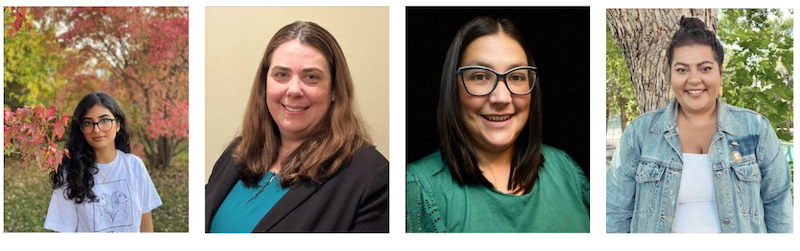
Participants for Panel #2:
Brittany Mazur (they/them)
Brittany Mazur is a registered social worker from treaty 1 territory also known as Winnipeg, Manitoba. Brittany obtained their Bachelor of Social Work from the University of Manitoba. Brittany has extensive experience working in therapeutic counseling and has spent over seven years providing one-on-one counseling to individuals recovering from trauma and addiction. Brittany has personal experience living as a single parent to an only child within a multigeneration family for 11 years prior to becoming a part of a blended family in 2022. Currently, Brittany continues to parent their biological daughter and 3 stepchildren with their partner.
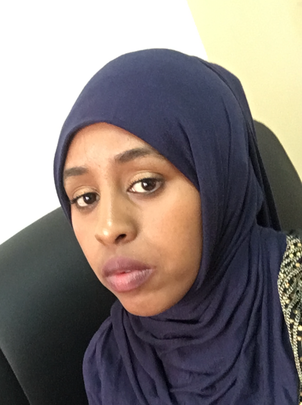
Adey Mohamed
Adey Mohamed is a Social Worker and PhD student in Peace and Conflict Studies at the University of Manitoba. She has been involved as a community researcher with African youth since 2015. Currently, works at Aurora family therapy as a Newcomer Mental Health Facilitator and Winnipeg Regional Health Authority as Health Coordinator at Health Science Centre with shared Health at Lennox Bell Place.
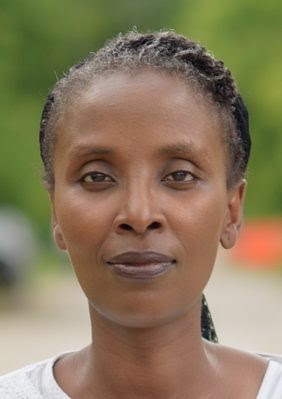
Louise Simbandumwe
Louise Simbandumwe is Co-Director at SEED Winnipeg and a grassroots community activist. A former refugee, Louise is passionate about human rights and social justice. Her volunteer commitments include the Immigration Partnership Winnipeg Council, the Immigration Matters in Canada Coalition, and the Police Accountability Coalition. She also served on the advisory committee for Manitoba’s poverty reduction strategy and the Ministerial advisory committee for Canada’s first poverty reduction strategy. Louise has a Bachelor in Commerce from the University of Saskatchewan and a Masters in Comparative Social Research from Oxford University. She has developed and taught innovative courses on financial empowerment, community economic development, and human rights advocacy at the University of Winnipeg.
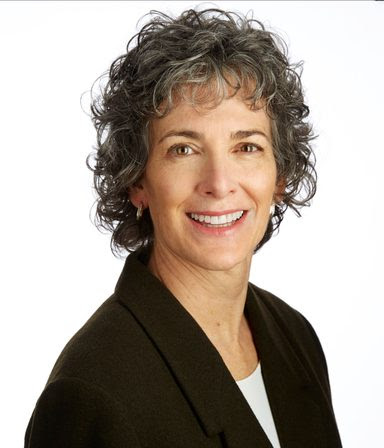
Dr. Margo Hilbrecht
Margo Hilbrecht is the Executive Director at the Vanier Institute of the Family, a national charitable organization committed to enhancing family wellbeing by making information about families accessible and actionable. A family scholar, Margo completed her Ph.D. in Leisure Studies at the University of Waterloo, where she studied time use and wellbeing of parents with non-standard work schedules. She has written and collaborated on academic articles and reports about gender differences in quality of life related to time use, leisure, work-life integration, and the social and health consequences of changing employment practices. Margo has more than 20 years’ experience in the academic and non-profit sectors, including as a Senior Research Associate with the Centre for Families, Work and Wellbeing (University of Guelph), where she focused on parents’ experiences of telework and self-employment and their effect on the quality of family time. Then, as Associate Director of Research at the Canadian Index of Wellbeing (University of Waterloo), she conducted research with academic, local government and not-for-profit partners on wellbeing in diverse communities across Canada. Before joining the Vanier Institute, Margo was the Academic Director of Greo, a knowledge translation and exchange organization. She has an Adjunct appointment in the Faculty of Health, University of Waterloo.
After years of dedicated leadership, our Director Martin will be stepping down as CMCCF enters an exciting new chapter. We are deeply grateful for everything he has brought to the Coalition of Manitoba Cultural Communities for Families, and we look forward to what lies ahead together.
As we navigate this transition, we welcome your questions, thoughts, and support. For any inquiries, please reach out to Florence at floxy166@yahoo.ca — she will be happy to hear from you.
Thank you for being part of our community.
Before You Download:
Please enter some information.
Purpose
The Purpose of These Peace-First: CollaborationNet Pages
These pages exist to share what we have learned.
Over the past year, Peace-First: CollaborationNet has operated as a time-limited demonstration initiative, which is a space to test ideas, host conversations, and discover what might grow when peace is placed at the center.
Conversations took root in informal Peace-First Hubs across Winnipeg, Thompson, Brandon, and Portage la Prairie, with related gatherings in Vancouver and Toronto. Toronto now helps convene national roundtable conversations, linking local dialogue with a broader Canadian exchange.
What began as small, local discussions has become more connected — not through expansion or centralization, but through coherence. Across regions, shared themes, tensions, and hopes are emerging.
This webpage documents that journey. It gathers reflections, materials, and learning from Hub conversations so others can understand what has been explored and carry it forward.
From the beginning, Peace-First was designed as a seed-planting initiative, formally concluding March 31, 2026. Its focus has been to explore how individuals and cultural communities understand inner peace, collective vision, community cohesion, and cultural dignity and visibility.
The Hubs are volunteer-led spaces where community connectors and members gather to listen, reflect, and imagine what a peaceful geographic and cultural community might look like in practice.
Along the way, we developed background papers, reflection documents, and practical toolkits shaped by lived experience in Manitoba and beyond. This page now serves as a living repository within the Peace-First Library, offering capacity-building tools, framing papers, hub guidance, and shared learning that communities can adapt to their own realities.
The purpose is not to centralize authority, but to make learning accessible.
Peace-First Hubs are community-led and partner-supported — grounded in relationship, not hierarchy. Supported by ACOMI, ECCM, Palaver Hut, MIA, cultural community members across the country, and allies such as MANSO, Mediation Services, CanU Canada, and PCHS, this work moves through partnership rather than control.
This initiative has been made possible through the principal financial support of the Department of Canadian Heritage, with a supportive role played by The Winnipeg Foundation. Their investment has allowed these conversations, materials, and connections to take shape.
These materials are not instructions to replicate. They are tools to adapt.
This page is more than documentation. It is an invitation.
Peace-First is not about imposing a uniform model. It is about strengthening conditions for dialogue, cohesion, and shared responsibility before a crisis.
If this resonates, we invite you to explore further, join a national roundtable call, or consider what it would mean to host or support a conversation in your own community. Join a national roundtable call. Complete the survey.
The seeds have been planted. What grows next depends on all of us.




 Previous Post
 Next Post