
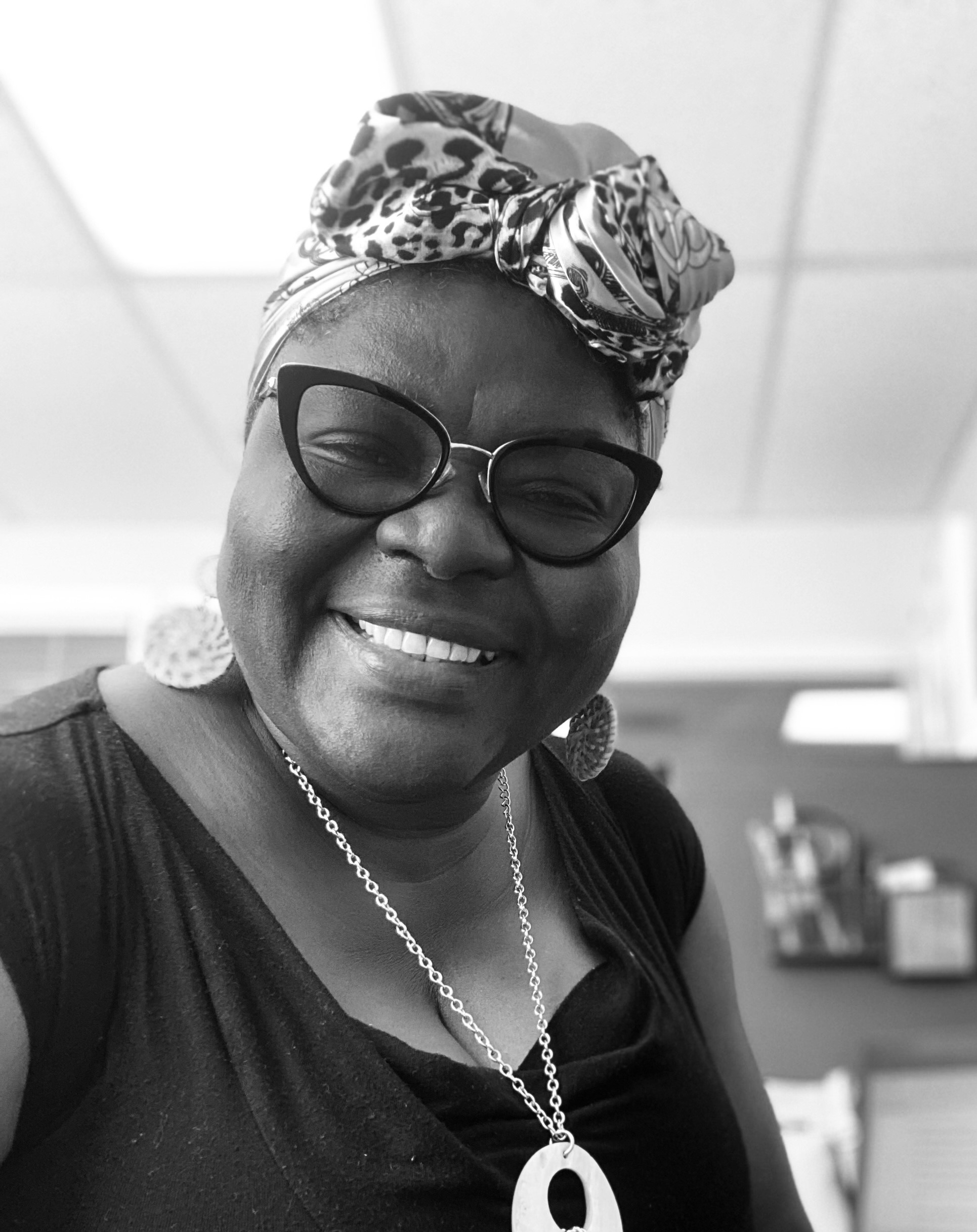
Patricia Ukpoka-Eyamba

Community Writer

Social Development Practitioner, Published Author, Coach, Mentor, and Integral Leadership Expert.

Patricia Ukpoka-Eyamba is a distinguished professional with a rich tapestry of experience in social development, leadership, and environmental policy. As a seasoned practitioner, she has left an indelible mark on international, national, and local-level programs, showcasing a commitment to promoting sustainable living through policy engagement.

Patricia excels in strengthening systems and maximizing institutional efficiency by cultivating robust relationships based on respect, reciprocity, and relevance within diverse partner networks. A dedicated researcher, Patricia has explored social, cultural, and environmental dynamics in urban, peri-urban, and rural resources-dependent communities. Her commitment to inclusivity and community engagement is evident in the participatory learning and action research she conducts for government, private sectors, NGOs, and communities. Her significant contributions have played a pivotal role in shaping several provincial and federal strategic documents.

Patricia’s work is grounded in core values of respect, dignity, and human rights, aligning with the ubuntu principle that emphasizes the importance of every voice being heard within a community.
Currently serving as the Program Coordinator for the Community Settlement Program at Family Dynamics, Patricia continues to make a positive impact. Her commitment extends to volunteering with key organizations.

Patricia Ukpoka-Eyamba’s professional journey is a testament to her unwavering dedication to social development, justice, equity environmental stewardship, and the well-being of diverse communities.
A Message to Our Community

After years of dedicated leadership, our Director Martin will be stepping down as CMCCF enters an exciting new chapter. We are deeply grateful for everything he has brought to the Coalition of Manitoba Cultural Communities for Families, and we look forward to what lies ahead together.

As we navigate this transition, we welcome your questions, thoughts, and support. For any inquiries, please reach out to Florence at floxy166@yahoo.ca — she will be happy to hear from you.

Thank you for being part of our community.

Before You Download:

Please enter some information.

Purpose

The Purpose of These Peace-First: CollaborationNet Pages These pages exist to share what we have learned. Over the past year, Peace-First: CollaborationNet has operated as a time-limited demonstration initiative, which is a space to test ideas, host conversations, and discover what might grow when peace is placed at the center. Conversations took root in informal Peace-First Hubs across Winnipeg, Thompson, Brandon, and Portage la Prairie, with related gatherings in Vancouver and Toronto. Toronto now helps convene national roundtable conversations, linking local dialogue with a broader Canadian exchange. What began as small, local discussions has become more connected — not through expansion or centralization, but through coherence. Across regions, shared themes, tensions, and hopes are emerging. This webpage documents that journey. It gathers reflections, materials, and learning from Hub conversations so others can understand what has been explored and carry it forward. From the beginning, Peace-First was designed as a seed-planting initiative, formally concluding March 31, 2026. Its focus has been to explore how individuals and cultural communities understand inner peace, collective vision, community cohesion, and cultural dignity and visibility. The Hubs are volunteer-led spaces where community connectors and members gather to listen, reflect, and imagine what a peaceful geographic and cultural community might look like in practice. Along the way, we developed background papers, reflection documents, and practical toolkits shaped by lived experience in Manitoba and beyond. This page now serves as a living repository within the Peace-First Library, offering capacity-building tools, framing papers, hub guidance, and shared learning that communities can adapt to their own realities. The purpose is not to centralize authority, but to make learning accessible. Peace-First Hubs are community-led and partner-supported — grounded in relationship, not hierarchy. Supported by ACOMI, ECCM, Palaver Hut, MIA, cultural community members across the country, and allies such as MANSO, Mediation Services, CanU Canada, and PCHS, this work moves through partnership rather than control. This initiative has been made possible through the principal financial support of the Department of Canadian Heritage, with a supportive role played by The Winnipeg Foundation. Their investment has allowed these conversations, materials, and connections to take shape. These materials are not instructions to replicate. They are tools to adapt. This page is more than documentation. It is an invitation. Peace-First is not about imposing a uniform model. It is about strengthening conditions for dialogue, cohesion, and shared responsibility before a crisis. If this resonates, we invite you to explore further, join a national roundtable call, or consider what it would mean to host or support a conversation in your own community. Join a national roundtable call. Complete the survey. The seeds have been planted. What grows next depends on all of us.

Other Videos