Winnipeg

Thompson

Portage

Brandon

Vancouver

National Roundtable

Peace-First: CollaborationNet (CLNET)

 Building Canada’s Peace-First Cultural Community–Led Peacebuilding Network : Manitoba Hubs, a National Roundtable, and Practical Tools and Approaches

Introduction

Our Peace-First, CollaborationNet (CLNET) is our community-led peacebuilding network rooted in a peace-first orientation. Rather than beginning with conflict, crisis, or harm, CLNET starts with a different question: what conditions allow people, families, and communities to remain whole under pressure and across difference? Peace, in this understanding, is not merely the absence of conflict, but the presence of dignity, trust, belonging, and the capacity to advance from rupture to repairing relationships when strain inevitably arises. This approach reflects a growing recognition that durable peace must be cultivated early and relationally, not imposed later through control-based or reactive systems.

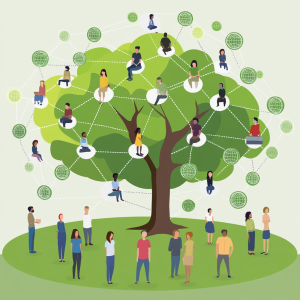
CLNET understands peace as a living ecology that begins within individuals, is reinforced in families, and is carried forward through cultural communities. Cultural communities are not treated as recipients of peacebuilding services, but as carriers of wisdom, memory, and practice by holding traditional structures, customs, and ancestral forms and practices of dialogue, story-telling, mutual responsibility, and repair that have sustained people through generations of disruption. By organizing through geographic community hubs and shared community leadership tables, CLNET creates spaces where this lived knowledge can be named, strengthened, and connected across Manitoba and beyond. In doing so, peace becomes proactive rather than reactive, developmental rather than corrective, and grounded in everyday life rather than reserved for moments of crisis.

About

Originated, created and developed by the Coalition of Manitoba Cultural Communities for Families (CMCCF) as a backbone organization, CLNET weaves together local leadership, cross-community learning, and collective reflection into a flexible, bottom-up network. CMCCF’s role is not to direct peace, but to create the conditions in which peace can grow by supporting dialogue, capacity-building, shared learning, and connection across regions and cultures. Through CLNET peace is reclaimed as a moral and civic inheritance, something communities actively steward and pass forward. In a time of increasing complexity and division, CLNET offers a grounded alternative: placing peace first, so communities can meet differences without losing their humanity.

cmccf-graphic

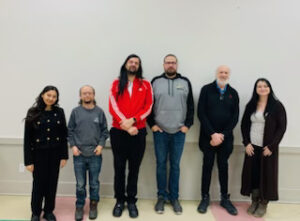
Our Team

Videos
Our other videos follow the full journey, from Peace-First back through earlier stages, featuring complete podcast recordings and our short REELS of lived experience in people’s own voices. Together, they form a living archive of community insight. View them on our YouTube channel.
This primary video introduces the purpose of Peace-First: CollaborationNet—what it is, why it matters, and why we created this final phase. It clarifies the vision, the need, and the invitation to step into a community-led model of peace building rooted in lived experience and shared responsibility. 

Network Stories

No stories yet!

No stories yet!

No stories yet!

No stories yet!

Resource Centre

The CMCCF Library and resource centre serves as a repository for papers that support peacebuilding in Manitoba’s cultural communities and the wider public sphere 

  • Speaker
  • Address

Blogs

Thank you to

Our Partners

Thank you to

Our Sponsors

Purpose

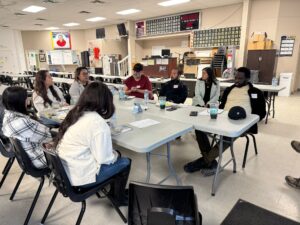
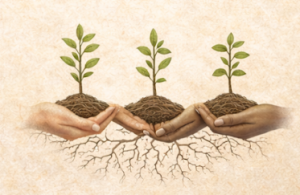
The Purpose of These Peace-First: CollaborationNet Pages These pages exist to share what we have learned. Over the past year, Peace-First: CollaborationNet has operated as a time-limited demonstration initiative, which is a space to test ideas, host conversations, and discover what might grow when peace is placed at the center. Conversations took root in informal Peace-First Hubs across Winnipeg, Thompson, Brandon, and Portage la Prairie, with related gatherings in Vancouver and Toronto. Toronto now helps convene national roundtable conversations, linking local dialogue with a broader Canadian exchange. What began as small, local discussions has become more connected — not through expansion or centralization, but through coherence. Across regions, shared themes, tensions, and hopes are emerging. This webpage documents that journey. It gathers reflections, materials, and learning from Hub conversations so others can understand what has been explored and carry it forward. From the beginning, Peace-First was designed as a seed-planting initiative, formally concluding March 31, 2026. Its focus has been to explore how individuals and cultural communities understand inner peace, collective vision, community cohesion, and cultural dignity and visibility. The Hubs are volunteer-led spaces where community connectors and members gather to listen, reflect, and imagine what a peaceful geographic and cultural community might look like in practice. Along the way, we developed background papers, reflection documents, and practical toolkits shaped by lived experience in Manitoba and beyond. This page now serves as a living repository within the Peace-First Library, offering capacity-building tools, framing papers, hub guidance, and shared learning that communities can adapt to their own realities. The purpose is not to centralize authority, but to make learning accessible. Peace-First Hubs are community-led and partner-supported — grounded in relationship, not hierarchy. Supported by ACOMI, ECCM, Palaver Hut, MIA, cultural community members across the country, and allies such as MANSO, Mediation Services, CanU Canada, and PCHS, this work moves through partnership rather than control. This initiative has been made possible through the principal financial support of the Department of Canadian Heritage, with a supportive role played by The Winnipeg Foundation. Their investment has allowed these conversations, materials, and connections to take shape. These materials are not instructions to replicate. They are tools to adapt. This page is more than documentation. It is an invitation. Peace-First is not about imposing a uniform model. It is about strengthening conditions for dialogue, cohesion, and shared responsibility before a crisis. If this resonates, we invite you to explore further, join a national roundtable call, or consider what it would mean to host or support a conversation in your own community. Join a national roundtable call. Complete the survey. The seeds have been planted. What grows next depends on all of us.

Other Videos

Before You Download:

Please enter some information.