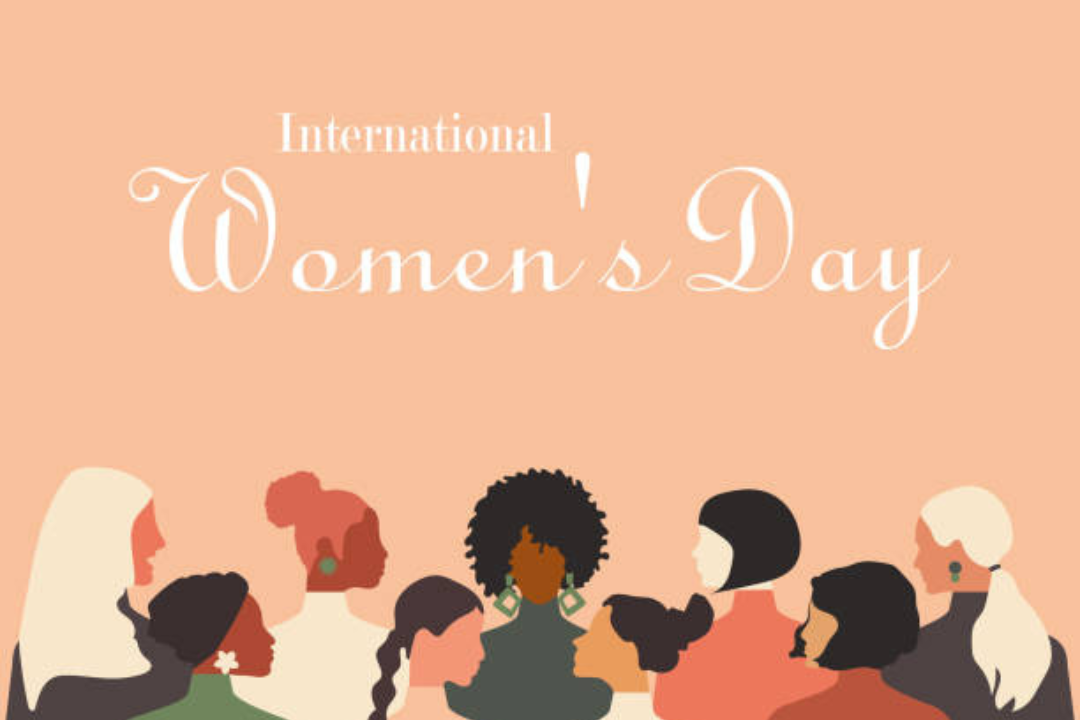
International Women’s Day (IWD) is a global celebration of women’s achievements around the world. In addition, IWD focuses on the work yet to be done in supporting and elevating equality for women. This year’s theme, Embrace Equity, reminds us, and emphasizes that this process requires whole communities much like raising a child takes a village.
In celebrating IWD, this article shares the achievements of three women across Canada who have overcome obstacles, are forging their own paths, and blazing a trail for all women.
Mercury Venus
Mercury Venus is a Filipino born and raised woman in technology. As a project manager in cyber security, Mercury is surprised at how few women are in specialized tech. Much like in her previous profession in the Navy where women only account for 2% of the workforce, two women out of forty in a department are the norm. Mercury credits networking with other women and finding female role models through Women in Aerospace with the success she has experienced later in her career.
An organization with a mission to provide young women in engineering with female mentors. Mercury pursued an occupation in the Navy as a means to do something different and leave the Philippines for a better life. She notes that she went into this career naively and that sheer grit and tenacity got her through the harsh conditions of sea life as the only female on board the ships. In changing her career, Mercury invested in personal development and mentorship to overcome the challenges that come with being unique in an industry.
Rumbi Muvingi
Rumbi Muvingi is an Aerospace Engineer. Her role is regulatory oversight for aircraft including helicopters, to ensure that they meet certification requirements. Additionally, she has experience in design and analysis. Rumbi’s initial dream to become a fighter jet pilot, was cut short because she lacked 20/20 vision at a time when corrective surgery was not an option. Born in Zimbabwe, Rumbi was fortunate to see women in non-traditional roles; however, few were in aerospace.
While attending high school in Canada, her science and computer teachers pushed her to engineering. Despite, the lack of female role models in her chosen field early on, Rumbi, found support in male mentors in her chosen field. They continually encouraged and challenged her to go further. Recently, Rumbi also discovered Women in Aerospace, an organization bringing women in non-traditional roles together.
Robin LaFreniere
Robin LaFreniere is from Lake Manitoba First Nations and identifies as Anishinaabe, a mother to a four-year-old and travels across Canada helping children and youth reintegrate into Indigenous communities from the welfare system. She is also a certified wilderness instructor with a background as a national park fire fighter. Robin’s path is leading her to structural fire fighting and her dreams are driven by the desire to be an example for her son. Many may recognize Robin’s name from her time in two reality television shows, Alone, where she made the top twenty-five contestants in the wilderness survival series and Chefs vs. Wild where she was tapped as a wilderness expert paired with a chef to prepare meals using ingredients from the wild.
In all her roles, Robin found few women to look up to. Her goal is to be that female role model for other women and show them that any dream is possible. She was fortunate to have both male mentors and several strong female family figure who paved their own paths in tough industries.
A shared thread runs through these women’s stories. Embracing who they are, never giving up, mentorship, role models and continued encouragement have all helped them break through barriers.
They all see IWD as a celebration of how far women have come and that women are able to thrive in non-traditional professions. Their hope is that society can further embrace the value that women bring and that their presence in these roles becomes more common across communities.
This article was written by community writer Tsungai Muvingi as part of our J.E.D.I. Initiative – Community Writers Project. All thoughts and opinions expressed are Tsungai’s own. You can learn more about Tsungai on our team page here.
To learn more about our Intercultural and Intergenerational Diversity and Inclusion Engagement Project, go to our J.E.D.I. Initiative landing page here.
After years of dedicated leadership, our Director Martin will be stepping down as CMCCF enters an exciting new chapter. We are deeply grateful for everything he has brought to the Coalition of Manitoba Cultural Communities for Families, and we look forward to what lies ahead together.
As we navigate this transition, we welcome your questions, thoughts, and support. For any inquiries, please reach out to Florence at floxy166@yahoo.ca — she will be happy to hear from you.
Thank you for being part of our community.
Before You Download:
Please enter some information.
Purpose
The Purpose of These Peace-First: CollaborationNet Pages
These pages exist to share what we have learned.
Over the past year, Peace-First: CollaborationNet has operated as a time-limited demonstration initiative, which is a space to test ideas, host conversations, and discover what might grow when peace is placed at the center.
Conversations took root in informal Peace-First Hubs across Winnipeg, Thompson, Brandon, and Portage la Prairie, with related gatherings in Vancouver and Toronto. Toronto now helps convene national roundtable conversations, linking local dialogue with a broader Canadian exchange.
What began as small, local discussions has become more connected — not through expansion or centralization, but through coherence. Across regions, shared themes, tensions, and hopes are emerging.
This webpage documents that journey. It gathers reflections, materials, and learning from Hub conversations so others can understand what has been explored and carry it forward.
From the beginning, Peace-First was designed as a seed-planting initiative, formally concluding March 31, 2026. Its focus has been to explore how individuals and cultural communities understand inner peace, collective vision, community cohesion, and cultural dignity and visibility.
The Hubs are volunteer-led spaces where community connectors and members gather to listen, reflect, and imagine what a peaceful geographic and cultural community might look like in practice.
Along the way, we developed background papers, reflection documents, and practical toolkits shaped by lived experience in Manitoba and beyond. This page now serves as a living repository within the Peace-First Library, offering capacity-building tools, framing papers, hub guidance, and shared learning that communities can adapt to their own realities.
The purpose is not to centralize authority, but to make learning accessible.
Peace-First Hubs are community-led and partner-supported — grounded in relationship, not hierarchy. Supported by ACOMI, ECCM, Palaver Hut, MIA, cultural community members across the country, and allies such as MANSO, Mediation Services, CanU Canada, and PCHS, this work moves through partnership rather than control.
This initiative has been made possible through the principal financial support of the Department of Canadian Heritage, with a supportive role played by The Winnipeg Foundation. Their investment has allowed these conversations, materials, and connections to take shape.
These materials are not instructions to replicate. They are tools to adapt.
This page is more than documentation. It is an invitation.
Peace-First is not about imposing a uniform model. It is about strengthening conditions for dialogue, cohesion, and shared responsibility before a crisis.
If this resonates, we invite you to explore further, join a national roundtable call, or consider what it would mean to host or support a conversation in your own community. Join a national roundtable call. Complete the survey.
The seeds have been planted. What grows next depends on all of us.




 Previous Post
 Next Post