Personal Narratives within the Ethnocultural Group

Personal Narratives within the Ethnocultural group

We are embarking  on a journey into the heart of personal narratives within the Ethnocultural group, as we shine the spotlight on two distinct voices: Carola Vergara, an unwavering member of over a decade, and Muhammad Yusuf, a recent addition with a fervent passion for shaping the identity of ethnocultural communities in Manitoba. Unravelling the common thread weaving their journeys together provides a unique insight into the diverse fabric of the Coalition of Manitoba Cultural Communities for Families (CMCCF).

Muhammad Yusuf, a Fresh Voice: Within the intricate fabric of CMCCF, Muhammad Yusuf emerges as a vibrant and fresh voice. Initially a mere observer, he found himself captivated by the dialogues unfolding, evolving into a fervent advocate for ethnocultural identity. His perspective mirrors the spirit of transformation, embodying the essence of laying a solid foundation for future generations.

Carola Vergara’s Immigrant Dream: Carola Vergara, a stalwart member for over a decade, shares her dream for the immigrant community within CMCCF. Inspired by the commitment and sincerity of leaders Martin and Steve, Carola envisions a flourishing future for ethnocultural communities in Manitoba. Despite the challenges, the group’s inclusive nature fosters mutual respect and support, creating a positive and enjoyable atmosphere for collaborative endeavours.

Both Muhammad and Carola foresee a future where today’s efforts create ripples of positive change. Muhammad seeks a lasting legacy beyond his time, while Carola emphasizes recognizing hidden potentials within immigrant communities for a healthier Manitoba.

Muhammad Yusuf’s Story Unveiled:

Interviewer: Muhammad, stepping into the Ethnocultural group meeting, what was on your mind?

Muhammad: Initially, I planned to be the silent observer, absorbing the vibes. But, those vibes turned into a mind party. It was like stumbling upon a hidden gem; the conversation was so captivating, it pulled me into the spotlight.

Interviewer: Share the feeling of that “E-get as e be” moment.

Muhammad: (Laughs) That Nigerian phrase perfectly captures the awe I felt. It’s like finding something so awesome that you throw your hands up and say, “This is it, folks!” We’re not just attending meetings; we’re creating history, the kind future folks will talk about. It’s like catching lightning in a bottle.

Interviewer: Paint the future for us, Muhammad.

Muhammad: Picture a future where today’s efforts are seeds growing into a massive tree of positive change. Even when we’re old, people will say, “Yeah, those guys started it all.” I’m talking legacy. I want our work to echo through the ages, inspiring generations yet unborn.

Interviewer: Clearly on a mission. How does this align with your groove?

Muhammad: It’s like finding the perfect beat, totally in sync with my aspirations. I want to be remembered as the guy who threw his hat into the ring, ensuring our identity stands tall. It’s about setting the stage for a future where everyone feels they belong.

Interviewer: Parting words?

Muhammad: “I hope things will be realized the way we are envisioning.” Keep the dream alive!
Carola Vergara’s Vision Unveiled:

Interviewer: Carola, how long have you been involved with the group?

Carola: Over a decade, and I’ll continue unless they stop.

Interviewer: Impressive! What keeps you here?

Carola: Leaders Martin and Steve are committed and sincere. Their vision aligns with empowering ethnocultural communities in Manitoba.

Interviewer: Your feelings about being part of this process?

Carola: Privileged. Despite challenges, our inclusive, supportive environment makes collaborative endeavours productive and fun.

Interviewer: Envisioning the future, what do you see?

Carola: Immigrant communities realizing their potentials for a healthier Manitoba. Ripples of our efforts creating a healthy community.

Interviewer: How does this align with your aspirations

Carola: My goal aligns with fostering inclusivity and empowering communities. I want communities to realize their power and make a difference collectively.

Interviewer: How has your perception evolved?

Carola: From hopeful anticipation to a grounded understanding of the process’ complexities, fostering determination.

Interviewer: Describe collaboration within the group.

Carola: Diverse, dedicated, and collectively committed. Collaboration augurs well for our ongoing initiatives.

Carola’s Last Words: “Get more immigrant communities involved. Hoping communities take over the picture they are trying to paint as part of policy and government.”

Interviewer: Thank you, Carola.

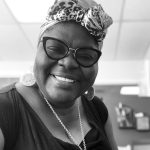
This article was written by community writer Patricia Eyamba as part of our J.E.D.I. Initiative – Community Writers Project. All thoughts and opinions expressed are Patricia’s own.

To learn more about our Intercultural and Intergenerational Diversity and Inclusion Engagement Project, go to our J.E.D.I. Initiative landing page here.

Author

Comments are closed.

A Message to Our Community

After years of dedicated leadership, our Director Martin will be stepping down as CMCCF enters an exciting new chapter. We are deeply grateful for everything he has brought to the Coalition of Manitoba Cultural Communities for Families, and we look forward to what lies ahead together.

As we navigate this transition, we welcome your questions, thoughts, and support. For any inquiries, please reach out to Florence at floxy166@yahoo.ca — she will be happy to hear from you.

Thank you for being part of our community.

Before You Download:

Please enter some information.

Purpose

The Purpose of These Peace-First: CollaborationNet Pages These pages exist to share what we have learned. Over the past year, Peace-First: CollaborationNet has operated as a time-limited demonstration initiative, which is a space to test ideas, host conversations, and discover what might grow when peace is placed at the center. Conversations took root in informal Peace-First Hubs across Winnipeg, Thompson, Brandon, and Portage la Prairie, with related gatherings in Vancouver and Toronto. Toronto now helps convene national roundtable conversations, linking local dialogue with a broader Canadian exchange. What began as small, local discussions has become more connected — not through expansion or centralization, but through coherence. Across regions, shared themes, tensions, and hopes are emerging. This webpage documents that journey. It gathers reflections, materials, and learning from Hub conversations so others can understand what has been explored and carry it forward. From the beginning, Peace-First was designed as a seed-planting initiative, formally concluding March 31, 2026. Its focus has been to explore how individuals and cultural communities understand inner peace, collective vision, community cohesion, and cultural dignity and visibility. The Hubs are volunteer-led spaces where community connectors and members gather to listen, reflect, and imagine what a peaceful geographic and cultural community might look like in practice. Along the way, we developed background papers, reflection documents, and practical toolkits shaped by lived experience in Manitoba and beyond. This page now serves as a living repository within the Peace-First Library, offering capacity-building tools, framing papers, hub guidance, and shared learning that communities can adapt to their own realities. The purpose is not to centralize authority, but to make learning accessible. Peace-First Hubs are community-led and partner-supported — grounded in relationship, not hierarchy. Supported by ACOMI, ECCM, Palaver Hut, MIA, cultural community members across the country, and allies such as MANSO, Mediation Services, CanU Canada, and PCHS, this work moves through partnership rather than control. This initiative has been made possible through the principal financial support of the Department of Canadian Heritage, with a supportive role played by The Winnipeg Foundation. Their investment has allowed these conversations, materials, and connections to take shape. These materials are not instructions to replicate. They are tools to adapt. This page is more than documentation. It is an invitation. Peace-First is not about imposing a uniform model. It is about strengthening conditions for dialogue, cohesion, and shared responsibility before a crisis. If this resonates, we invite you to explore further, join a national roundtable call, or consider what it would mean to host or support a conversation in your own community. Join a national roundtable call. Complete the survey. The seeds have been planted. What grows next depends on all of us.

Other Videos