Introduction: A Shared Journey of Learning
Perla and I have each been part of CMCCF’s community-engaged journey for many years— myself for more than six years, and Perla for even longer. Over that time, we have had the opportunity to witness the growth of a body of work rooted not only in projects and activities, but in a deeper vision, set of values, and long-term commitment to cultural communities across Manitoba and beyond. In this reflection, we want to share some of what we have learned and observed along the way, and to highlight the purpose and principles that have shaped this journey.
One Continuous Journey
Looking back at the JEDI project, then Building Bridges, then Collaboration NET, and now PeaceFirst, we do not see these as isolated or piecemeal initiatives. Rather, we see them as part of one evolving journey. Each project has built on the one before it, carrying forward a consistent set of values, relationships, and ways of working. While the themes and activities have shifted over time, the deeper commitments have remained remarkably steady.
Community Engagement as Purpose and Process
One of the clearest lessons from this journey is that community engagement was never simply a method used to achieve results. It was both the purpose and the process. Creating meaningful space for communities to gather, reflect, contribute, and shape direction was always central to the work. The intention was not only to run projects, but to help create the conditions in which trust, voice, visibility, and impact could grow.
Every Voice Matters
At the heart of CMCCF’s work has been a strong belief in two connected ideas: that every voice matters, and that cultural communities must be recognized as leaders in shaping their own futures. This has meant more than inviting participation. It has meant affirming that immigrants, newcomers, and diverse cultural communities carry knowledge, wisdom, leadership capacity, and lived experience that are essential to community well-being and to public life more broadly. It has also meant insisting that these communities have every right to be present at the tables where decisions are discussed, futures are imagined, and policies are shaped.
Strengths, Wisdom, and Cultural Agency
Over time, these ideas became more deeply embedded in the development and implementation of CMCCF’s work. There has been a growing emphasis on ensuring that the cultural traditions, practices, and strengths of immigrants and newcomers are not only acknowledged, but genuinely valued and included. What we have learned through this process is that cultural communities do not begin from a place of deficit. They bring inherited strengths, pre-migration wisdom, leadership experience, and deep cultural resources. When the right conditions are created, these assets can be mobilized to advocate, to contribute, and to help shape a better future in Canada.
A Foundation That Grew Stronger Over Time
This understanding has strengthened with each phase of the work. Even when the substantive focus of a project changed, the underlying principles remained present and became clearer over time. CMCCF’s work has consistently pointed toward agency, dignity, participation, and belonging. These are not side concerns. They are foundational.
Storytelling, Documentation, and Community Voice
Another important part of this journey has been the effort to document and share what has been happening. In addition to organizing engagements and reaching out to communities, the Coalition has invested considerable time and care in communicating the work through interviews, podcasts, blogs, and other forms of storytelling. For those who are new to CMCCF, or for those wanting to better understand the scope and impact of its work, these communications provide an important record.
Perla’s ongoing storytelling interviews and podcasts, in particular, have helped preserve community voices, wisdom, and reflections in a consistent and accessible way. They have also made visible the strength that people carry through their stories, values, and cultural traditions.
Peace-First as the Current Expression of the Journey
Peace-First, the Coalition’s current project, feels like a natural continuation of this longer journey. It does not stand apart from the earlier initiatives. Rather, it gathers many of the same values and lessons and brings them into a new phase of peacebuilding work. This feels especially important in a time marked by uncertainty, conflict, suffering, and deep social fragmentation across many parts of the world. The language of peace, and the work of helping people reflect on where peace begins, has become both timely and necessary.
A Growing Reach Beyond Winnipeg
Although the Peace Roundtables began in Winnipeg, their ripple effect has continued into smaller Manitoba communities and beyond. The work has also extended into Toronto and the GTA, as well as Vancouver, British Columbia. This widening reach suggests that the ideas at the centre of this work resonate across different places and communities. People are looking for ways to speak about peace, practice it more intentionally, and connect it to everyday life, leadership, belonging, and community well-being.
Perla’s Reflection on Peacebuilding
As Perla noted during one of our conversations:
“Altogether, the work we do—especially peace-building—is very commendable. I hope it’s something that can be replicated again and again. The podcasts, the conversations, the messaging, all of it is simple, but very necessary. The idea of inner peace starting with each one of us, not from the top down, really matters.”
Her words capture something essential about the direction this work has taken. Peace is not only a public or institutional matter. It also begins within people, within relationships, and within communities.
Writing the Journey Along the Way
My own regular blog series, which ran from 2023 to 2025, followed this unfolding journey as well, beginning with the JEDI initiative through The JEDI Journey with Alka and continuing through Building Bridges in Talking Peace with Alka. Writing through these phases helped me see even more clearly how much this work matters. In a world marked by chaos, violence, and profound human suffering, helping people name their experiences, reconnect with peace, and understand where peace begins is both powerful and necessary.
What Endures
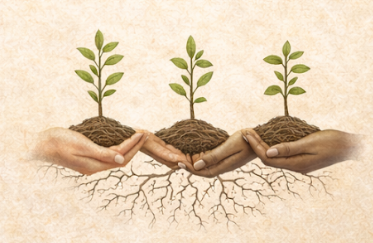
Looking back across these years, what stands out most is not only the range of projects CMCCF has undertaken, but the consistency of the values that have sustained them: respect for every voice, belief in the wisdom and agency of cultural communities, commitment to authentic engagement, and a willingness to build from the ground up rather than impose from the top down. These are the threads that connect the journey from JEDI to Peace-First.
Conclusion: Why This Work Must Continue
This work matters deeply. It offers a way of thinking and acting that honours dignity, cultural knowledge, leadership, and hope. It reminds us that peacebuilding is not abstract. It is relational, practical, and rooted in the lives of ordinary people. CMCCF’s journey has shown that when communities are heard, respected, and engaged as leaders, something important becomes possible. That is why we believe in this work, and we wish that it continues.
Given the complex and turbulent times we find ourselves living in, we need Peace-First; and we hope that more and more individuals and organizations wish to engage and contribute to this cause so it grows and deepens further.
Finally, we hope that together we can contribute to creating a better world-a world that is at peace, not at war, where power is divided equally and the rights of all peoples to co-exist with humanity, dignity, and courage are recognised and respected.


 Previous Post
 Next Post