A Conversation That Started with a Simple Question: PeaceFirst—Youth Perspectives
By Areessa Menaal Afzal
Setting the Scene
There are moments after an event ends when the room is quiet again, the chairs are slightly out of place, and the energy lingers in a way that is hard to explain. You can still feel the conversations in the air. That was the feeling that followed the Peace-First gathering. It did not feel like something had ended. It felt like something had just begun.
On March 15, 2026, young people gathered at Mediation Services for the Winnipeg-based Coalition of Manitoba Cultural Communities for Family’s (CMCCF) Peace-First, a reflective community event centered on youth perspectives on inner peace. The gathering created space for participants to explore a question that feels simple at first, but becomes more complex the longer you sit with it: Is inner peace important?
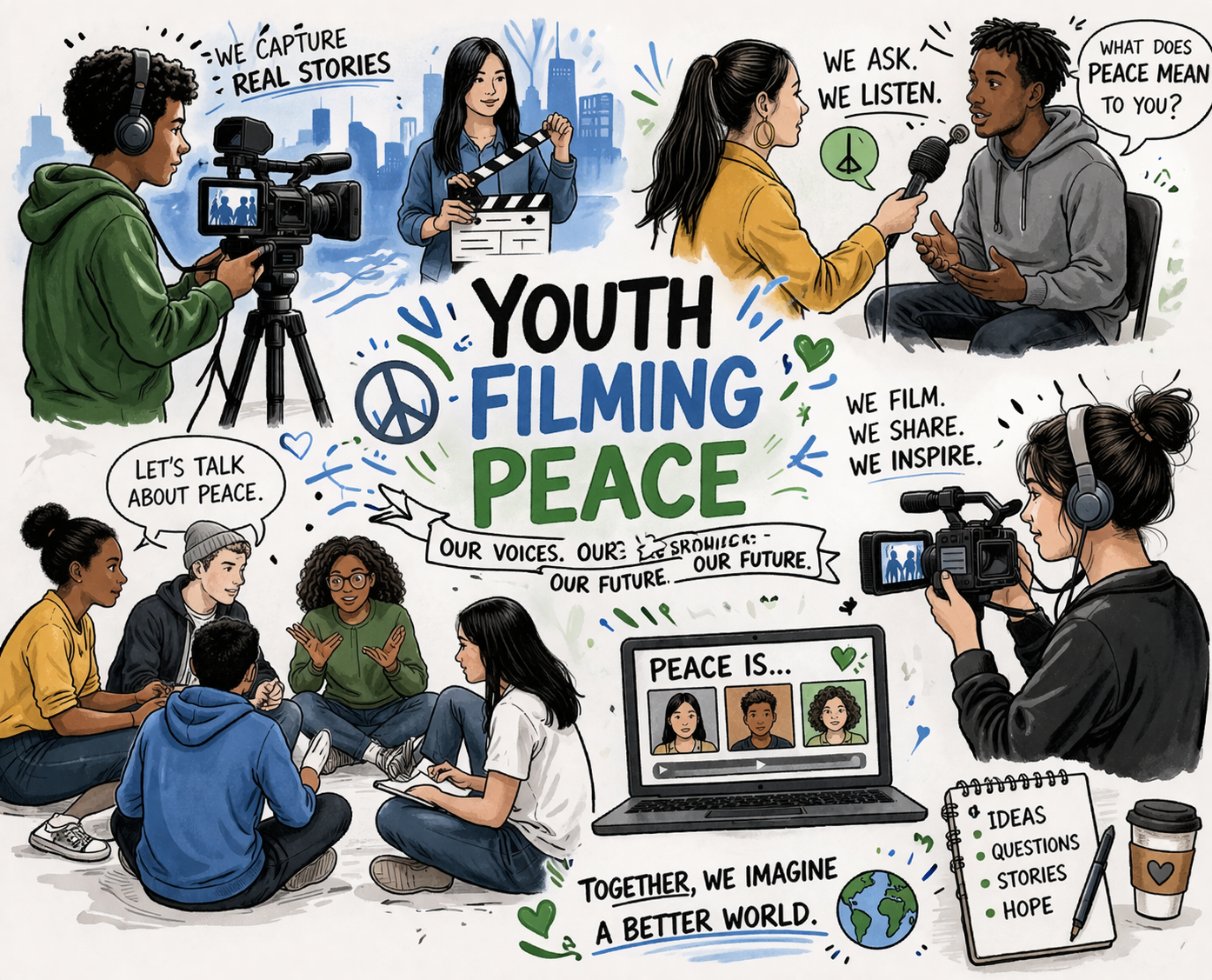
The event was also part of a broader documentary project commissioned by CMCCF designed to capture honest youth voices, reflections, and lived experiences around peace, identity, and well-being. Through conversation, interviews, and anonymous reflections, the goal was to carry these perspectives beyond the room and into a wider peacebuilding dialogue.
I stepped into this event as both an organizer and facilitator, focused on creating a space where people felt comfortable enough to speak openly and be themselves. Much of my attention was on the structure and energy in the room, making sure everything unfolded intentionally. But as the conversations developed, I found myself drawn into them in a different way, not just as someone guiding the space, but as someone deeply moved by what was being shared.
Why This Gathering Mattered
Peace-First was not designed to be loud or performative. It was intentionally reflective, grounded, and human. The goal was not to debate or convince, but to understand. The space invited young people to speak honestly about their experiences with inner peace, to listen to one another, and to recognize that peace is not only something negotiated between countries or discussed in global forums. It is something lived, felt, and practiced every day.
That was part of what made the event so meaningful. It created room for a question that is often overlooked in everyday life. In a world shaped by urgency, pressure, and constant noise, pausing to ask what peace feels like internally is not a small thing. It is a necessary thing.
Creating Space for Honest Youth Voices
What made the experience powerful was not just what was said, but how it was said. There was no pressure to have the perfect answer. There was no expectation to sound polished or profound. People spoke in pauses, in half-formed thoughts, and in stories that did not always arrive with neat conclusions. Somehow, that made everything feel more genuine.
One person shared that inner peace, for them, is built through community and support from friends, family, and neighbours. Another spoke about how difficult it was even to define peace, especially in a fast-paced world where everything is changing. There were reflections on family values, cultural identity, school pressures, and the quiet battles people carry within themselves that others rarely see.
What stood out was how different everyone’s definitions were, and yet how deeply they connected. Even when experiences were not identical, there was recognition. People nodded. People listened closely. There was a shared understanding that inner peace is not a fixed destination, but something that shifts depending on where you are in life.
Anonymous Reflections and Deeper Conversations
The structure of the event allowed these layers to emerge naturally. Alongside the group discussion, there was an anonymous reflection activity. Participants were invited to respond to prompts, fold their reflections, and place them into a bowl.
This part of the event carried a different kind of weight. Without the presence of identity, people wrote more openly. Some reflections were raw and vulnerable. Others were simple, almost quiet in their honesty. But each one added another layer to the conversation.
There is something powerful about anonymity in spaces like this. It removes the fear of judgment and allows truth to come forward more freely. It also reminds us that behind every composed exterior are thoughts and feelings that often go unspoken.
The individual interviews added yet another dimension. These conversations allowed participants to go deeper into their personal experiences with inner peace. They spoke about the habits they are trying to build, the challenges they face, and the ways they navigate their internal worlds.
The Event and the Documentary
The interviews were filmed as part of the documentary, with our CMCCF videography team, Tsion Zebene and Karl Jarred Abad, leading the process. They created a calm and comfortable environment that allowed participants to feel at ease in front of the camera. While being filmed can sometimes feel intimidating, many participants leaned into the experience, using it as an opportunity to reflect more deeply and speak with intention. In many ways, the interviews became a chance for people to slow down, process their thoughts, and share perspectives that might not have surfaced as fully in a group setting.
What made these interviews meaningful was their authenticity. They were not scripted or rehearsed. They were real conversations with real people who are still in the process of understanding themselves. That is what made them resonate.
The documentary, Peace-First: Is Inner Peace Important? Youth Perspectives, is currently in development. It is being created to center youth voices in conversations around peace, identity, and well-being. It brings together reflections from the event to show how young people are thinking about and experiencing inner peace in their daily lives. Its purpose is not simply to document what happened in the room, but to carry those voices outward into a broader dialogue.
The Link Between Inner Peace and Outer Peace
One of the most important insights from the event was that inner peace cannot be separated from outer peace. It is often spoken about as an individual pursuit, something you work on quietly within yourself. But the conversations made it clear that how we show up for others is deeply connected to how we feel within ourselves.
When people feel grounded, heard, and at peace internally, it changes how they interact with the world around them. It influences how they respond to conflict, how they support others, and how they contribute to their communities. In that sense, inner peace is not just personal. It is collective.
Peace-First created a space where those small things were valued, where taking a moment to breathe, listen, and reflect was seen as meaningful. It challenged the idea that peace has to be something grand or distant. Instead, it brought the conversation back to the present, to what can be done here and now.
Why Youth Voices Need to Be Heard
Another important aspect of the event was the emphasis on youth voices. Too often, conversations about peace are dominated by older generations or formal institutions. While those perspectives matter, they do not always capture the realities young people are navigating today.
By centering youth voices, the event highlighted experiences that are often overlooked. It showed that young people are not only aware of the concept of peace, but are actively thinking about it, questioning it, and trying to live it in their own ways.
The atmosphere of the event made these conversations possible. It was intentionally calm and welcoming. There was no sense of hierarchy. Everyone was on the same level, contributing in their own way, harmonizing.
What I Learned Through Listening
There was a moment during the event when I stopped thinking as an organizer and simply listened. In that moment, the question we were asking everyone else turned back on me.
I realized that I have spent a great deal of time thinking of peace as something I had to maintain for everyone else, keeping things together, meeting expectations, and moving through life without really pausing. Growing up while navigating identity, pressure, and the constant feeling of being perceived, peace often felt like something external rather than something I actually felt within myself.
But listening to everyone speak made me rethink that. Inner peace is not about having everything figured out or always feeling calm. It is about being honest with yourself. It is about allowing yourself to slow down, to feel things fully, and to not always perform strength.
My identity is part of that, but so is everything else: the pressure to succeed, the responsibility I carry, and the way I show up for others before I show up for myself. This event made me realize how easy it is to disconnect from your own inner world while trying to handle everything around you.
I am still figuring it out. But I am beginning to understand that inner peace is not something I will suddenly arrive at or achieve all at once. It is something I have to choose, in small, intentional ways, every day.
Why This Matters Beyond One Event
As the event came to a close, there was a strong sense that the conversation was far from over. If anything, it felt like it had only just opened up. The question of inner peace does not have a single answer, and it cannot be resolved in one discussion, even over the course of two hours.
But that is not the point. The point is to keep asking the question. To keep creating spaces where people can explore it together. To bring the conversation into more rooms, more communities, and more everyday moments.
Because that is how change happens, not through one event, but through ongoing dialogue, through the willingness to listen, reflect, and engage with ideas that do not always come with clear answers.
One of the most powerful aspects of Peace-First is its potential to extend beyond the event itself. The conversations that took place are not meant to stay within that room. They are meant to be carried forward, shared, and used to spark new discussions.
Imagine what it would look like if more spaces existed where people could talk openly about inner peace, not in a formal or rigid way, but in a way that feels natural and accessible in everyday life. Around dinner tables. In classrooms. Among friends.
These conversations do not require special equipment or large audiences. They require presence. They require honesty. They require a willingness to listen without immediately trying to respond.
That is something the event demonstrated clearly. The most impactful moments were often the simplest ones: a pause before someone spoke, a moment of silence after a reflection was read, the quiet understanding that passed between people without words.
Those moments are easy to overlook, but they are where connection happens. They are where people feel seen and heard. And in a world that often moves too quickly, those moments matter.
Carrying the Conversation Forward
Peace-First was not about providing solutions or definitive answers. It was about opening a space for exploration. It was about recognizing that peace is not a fixed concept, but something that evolves with each person’s experience.
It was also a reminder that vulnerability is not weakness. It is strength. It takes courage to speak honestly about your inner world, especially in a group setting. But when one person does it, it creates room for others to do the same.
This is what makes conversations like these so important. They build empathy. They challenge assumptions. They create connections that might not have existed otherwise.
In reflecting on the event, it becomes clear that its impact is not limited to what was captured on camera. While the documentary will be a powerful way to share these conversations with a wider audience, the true impact lies in the experience itself, in the people who walked into the room and left with new perspectives, in the conversations that will continue afterward, and in the small shifts in how people think about and approach inner peace in their own lives.
As the documentary comes together, it will carry these moments beyond the event, allowing others to witness and reflect on the perspectives that were shared. The goal is not simply to document the conversation, but to extend it, to encourage more people to ask the same questions and create spaces of their own where these conversations can continue.
The question now is how to carry this forward, how to ensure that this is not just a one-time conversation, but part of a larger movement toward more intentional, reflective spaces.
That starts with each of us. It starts with being willing to ask difficult questions, to sit with discomfort, and to recognize that inner peace is not something achieved overnight, but something that requires ongoing attention.
It also means being willing to create space for others, to listen without judgment, and to engage in conversations that might not have clear outcomes, but are still worth having.
Peace-First showed that this is possible. It showed that when people are brought together with intention and care, meaningful conversations can happen. And those conversations have the power to create change, even in small ways.
Closing Reflection
As the room emptied and the event came to an end, there was a quiet sense of gratitude, not just for the event itself, but for the opportunity to be part of something that felt genuine and meaningful.
Because at the end of the day, that is what people are looking for: spaces where they can be themselves, conversations that go beyond surface-level interaction, and moments that make them pause and reflect.
Peace First was one of those moments.
And the hope is that it will not be the last.

 Previous Post