Positive Peace as Energy, Memory, and Movement — Vancouver

Peace as Inner Radiance

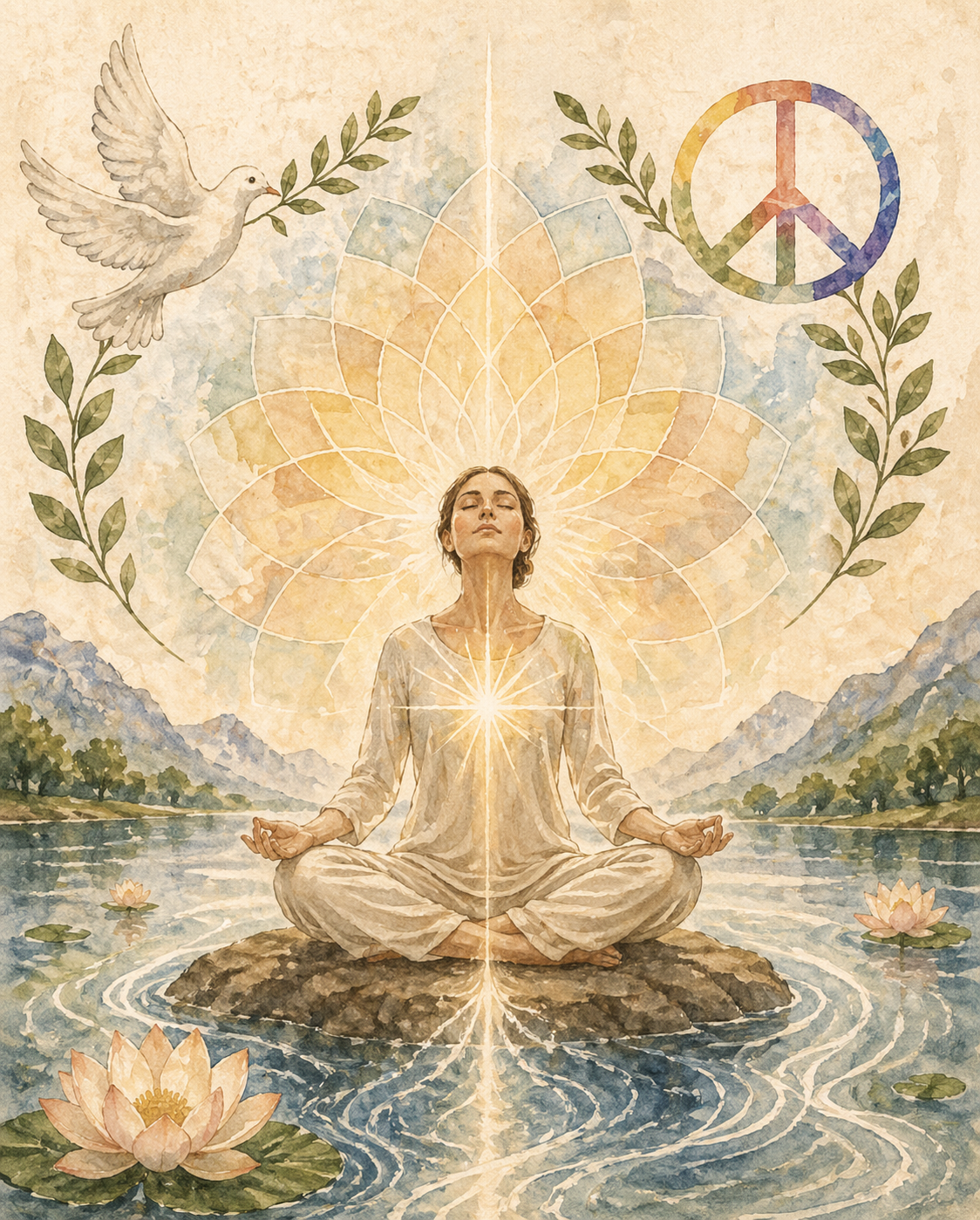
Peace, when it awakens within us, becomes a radiant force. It shines outward with such clarity that it can transform the shadows of pain, trauma, fear, loneliness, and stress into higher energies: trust, abundance, serenity, connectedness, love, and ultimately, peace itself.

The reach of peace is shaped by the depth of our inner light. When our souls are purified and aligned with the universal source, the radius of our peace expands beyond time and space. This is the sacred wisdom I hold as one of the most precious inheritances from my ancestors.


Peace in Movement and Memory

When we dance in circles, we mirror the cosmos. We become moving galaxies, each of us a star igniting a collective brilliance of joy, trust, unity, and shared identity.

Our hearts and drumbeats synchronize with our hands, shoulders, and feet. Our faces glow with bliss, and our souls remind us: we love one another, we love our ancestors, we love the generations yet to come, we love the soil beneath our feet, and we love the Creator, the Highest Being.


Cultural Pride as Love

Our pride as Baloch and Kurd is not rooted in ego. It is a love for who our elders were and who we continue to be.

This pride does not limit our respect for other cultures, races, or identities. It deepens it. It teaches us cultural sensitivity, compassion, and the art of giving and receiving love.


Peace Is Not Silence

Peace is a reciprocal flow of elevated energy—heart to heart, soul to soul—reaching outward to the winds, oceans, deserts, forests, mountains, and the known and unknown universes.

True peace is the opposite of the silence imposed by graveyards, military zones, occupied lands, or prisons. Negative peace is not peace at all. The cries of souls from residential schools, madrassas, refugee camps, and stolen lands echo across centuries.


Peace in War, Exile, and Survival

As a mother in a war-torn region, peace meant a safe corner with a little food for my children—somewhere without bombs, gunfire, or soldiers’ howls—so I could remove the wool pads from my newborn’s ears.

As a human rights defender raising young children, peace meant abandoning dinner and running again and again to escape raids. It was the ninth attack in a single month.

In exile, as a refugee, peace meant moving my family from the front of a shelter to the back, hoping to survive if the landmine planted at the entrance exploded.


Peace in Canada’s Contradictions

Canada, a country shaped by the rule of law and respect for human rights, can still feel paradoxically heavy. News of violence and suffering from home haunts every moment.

In deep helplessness, I sit by the Stahlo River, where the winds and waves sometimes seem to cry, remembering the stories of their daughters and sons. It is strange to feel sadness in a land known for freedom.

Immigrant communities understand this contradiction. We are beneficiaries of safety and prosperity, while also living with the knowledge that these realities are connected to histories of loss. This awareness deepens our nostalgia.


Cultivating Positive Peace Together

Canadians—Indigenous peoples, long-settled communities, and newcomers alike—carry currents of trauma, memory, sadness, and hope.

We deserve a thoughtful and intentional way to cultivate and exchange positive peace, so that its radiance can flow through our communities, across our homelands, and outward into the world and the universes beyond.

Author

Comments are closed.

A Message to Our Community

After years of dedicated leadership, our Director Martin will be stepping down as CMCCF enters an exciting new chapter. We are deeply grateful for everything he has brought to the Coalition of Manitoba Cultural Communities for Families, and we look forward to what lies ahead together.

As we navigate this transition, we welcome your questions, thoughts, and support. For any inquiries, please reach out to Florence at floxy166@yahoo.ca — she will be happy to hear from you.

Thank you for being part of our community.

Before You Download:

Please enter some information.

Purpose

The Purpose of These Peace-First: CollaborationNet Pages These pages exist to share what we have learned. Over the past year, Peace-First: CollaborationNet has operated as a time-limited demonstration initiative, which is a space to test ideas, host conversations, and discover what might grow when peace is placed at the center. Conversations took root in informal Peace-First Hubs across Winnipeg, Thompson, Brandon, and Portage la Prairie, with related gatherings in Vancouver and Toronto. Toronto now helps convene national roundtable conversations, linking local dialogue with a broader Canadian exchange. What began as small, local discussions has become more connected — not through expansion or centralization, but through coherence. Across regions, shared themes, tensions, and hopes are emerging. This webpage documents that journey. It gathers reflections, materials, and learning from Hub conversations so others can understand what has been explored and carry it forward. From the beginning, Peace-First was designed as a seed-planting initiative, formally concluding March 31, 2026. Its focus has been to explore how individuals and cultural communities understand inner peace, collective vision, community cohesion, and cultural dignity and visibility. The Hubs are volunteer-led spaces where community connectors and members gather to listen, reflect, and imagine what a peaceful geographic and cultural community might look like in practice. Along the way, we developed background papers, reflection documents, and practical toolkits shaped by lived experience in Manitoba and beyond. This page now serves as a living repository within the Peace-First Library, offering capacity-building tools, framing papers, hub guidance, and shared learning that communities can adapt to their own realities. The purpose is not to centralize authority, but to make learning accessible. Peace-First Hubs are community-led and partner-supported — grounded in relationship, not hierarchy. Supported by ACOMI, ECCM, Palaver Hut, MIA, cultural community members across the country, and allies such as MANSO, Mediation Services, CanU Canada, and PCHS, this work moves through partnership rather than control. This initiative has been made possible through the principal financial support of the Department of Canadian Heritage, with a supportive role played by The Winnipeg Foundation. Their investment has allowed these conversations, materials, and connections to take shape. These materials are not instructions to replicate. They are tools to adapt. This page is more than documentation. It is an invitation. Peace-First is not about imposing a uniform model. It is about strengthening conditions for dialogue, cohesion, and shared responsibility before a crisis. If this resonates, we invite you to explore further, join a national roundtable call, or consider what it would mean to host or support a conversation in your own community. Join a national roundtable call. Complete the survey. The seeds have been planted. What grows next depends on all of us.

Other Videos